
Diamond shopping in Singapore has changed noticeably in recent years. Buyers no longer have to choose only between different grades of mined stones. Lab-grown diamonds have become a serious option for engagement rings, wedding jewellery, anniversary gifts, and everyday fine jewellery.
These diamonds appeal to shoppers who want the appearance and physical properties of a diamond while getting more flexibility from their budget. For people researching lab diamonds singapore, the key is understanding that price alone should not guide the purchase. Cut quality, certification, setting design, after-sales service, and the seller’s reputation can make a major difference.
Singapore’s jewellery market gives buyers access to both traditional boutiques and modern diamond specialists. Before choosing a stone, it helps to understand where laboratory-grown diamonds offer value and where their limitations may matter.
Table of Contents
Pros and Cons of Buying Lab-Grown Diamonds
A lab-grown stone can be an excellent purchase, but it is not automatically the right choice for everyone. Comparing the advantages and disadvantages makes the decision much easier.
Pros: More Diamond for Your Budget
One major advantage is buying power. Laboratory-grown stones generally allow shoppers to consider a larger carat weight or higher specifications without moving into the price range of an equivalent mined diamond.
For example, someone shopping for an engagement ring may have a fixed budget but want a larger centre stone. Choosing a laboratory-created diamond could leave enough room in the budget for a better setting, wedding band, or higher cut grade.
Pros: They Are Real Diamonds
Lab-created diamonds should not be confused with cubic zirconia or other diamond simulants. They share the essential chemical, optical, and physical characteristics associated with diamonds.
They are produced using controlled technological processes, commonly High Pressure High Temperature (HPHT) or Chemical Vapor Deposition (CVD). The finished stones can then be cut, polished, graded, and set into jewellery.
Pros: Plenty of Design Choices
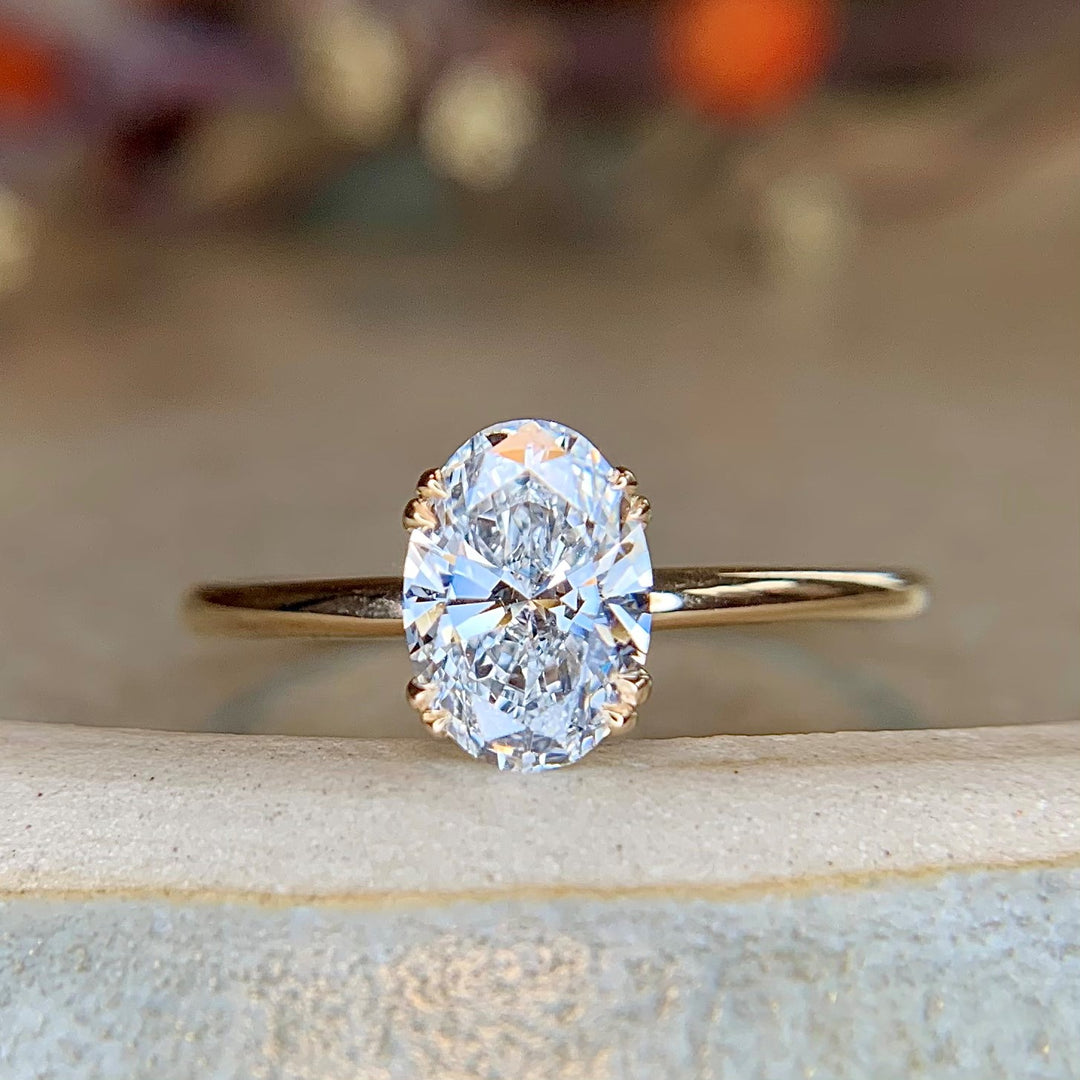
Modern buyers are not limited to a classic round solitaire. Laboratory-grown stones are available in popular shapes such as oval, emerald, cushion, pear, princess, and radiant cuts.
That variety gives Singapore shoppers more freedom to create personalised rings. A buyer could select an elongated oval for a delicate setting or an emerald cut for a cleaner, geometric appearance.
Cons: Resale Value Can Be Uncertain
Resale expectations deserve careful consideration. Prices for newly produced laboratory-grown stones have changed as manufacturing capacity and competition have increased.
A diamond ring should therefore be purchased mainly for its personal use and enjoyment rather than treated as a guaranteed investment. Buyers who care strongly about future resale should research the secondary market before purchasing.
Cons: Quality Still Varies
The word “lab-grown” does not guarantee an exceptional stone. Two diamonds with similar carat weights can look noticeably different because of their cut, colour, clarity, proportions, and manufacturing characteristics.
Poor cutting can reduce brilliance. Visible inclusions or undesirable colour can also affect appearance. Buyers should evaluate the complete stone rather than focusing on carat size.
Expert Tips for Singapore Diamond Shoppers
Buying a diamond becomes easier once you know which specifications deserve attention. A few practical checks can prevent buyers from spending extra money on qualities they cannot actually see.
Prioritise Cut Before Carat Weight
Carat describes weight, not beauty. A slightly smaller diamond with excellent proportions may look brighter and more attractive than a heavier stone with a weak cut.
For round diamonds in particular, pay close attention to cut performance. With fancy shapes, compare stones visually because proportions can affect each shape differently.
Ask for Independent Grading Information
A grading report provides useful information about the diamond’s characteristics. Depending on the laboratory and report, this can include carat weight, colour, clarity, measurements, proportions, and whether the stone was laboratory-grown.
Check that the report details match the diamond being offered. Buyers should also ask whether a laser inscription is present and how it can be verified.
Compare the Final Ring Price
A cheap centre stone does not always mean a cheap finished ring. The setting, metal, side stones, custom work, resizing policies, and warranties can change the total cost significantly.
Compare like with like. If one jeweller quotes a loose stone while another includes an 18K gold or platinum setting, the two prices are not directly comparable.
View the Diamond in Different Lighting
Jewellery-store lighting can make almost any well-presented diamond sparkle. Ask to view the ring under normal indoor lighting and, where possible, natural light.
Look at brightness, fire, shape, and how the stone appears from different angles. This simple check is particularly helpful when choosing between two similarly graded diamonds.
Singapore shoppers sometimes compare international markets before committing to a purchase. Researching options such as lab grown diamonds spain can provide useful context about designs and global availability, but local taxes, warranties, resizing, returns, shipping, and after-sales support should also influence the final decision.
Think About Singapore’s Climate and Daily Wear
Singapore’s warm, humid climate means rings can be exposed to sweat, skincare products, sunscreen, and frequent handwashing. These factors do not normally damage the diamond itself, but residue can reduce its sparkle.
Choose a setting that suits your lifestyle. Someone who works with their hands may prefer a lower-profile design instead of a tall setting that catches easily on clothing or objects.
Key Takeaways
Before purchasing a laboratory-grown diamond in Singapore, keep these points in mind:
- Compare cut quality before chasing the largest possible carat weight.
- Review colour and clarity according to what is visible, not simply the highest grade available.
- Request reliable grading documentation for the stone.
- Compare complete ring prices rather than loose-diamond prices alone.
- Check resizing, returns, warranties, and after-sales cleaning policies.
- Consider how the ring will fit your daily routine and lifestyle.
- Do not assume every laboratory-grown diamond offers the same quality.
- Treat jewellery primarily as a personal purchase rather than relying on future resale value.
A balanced approach usually delivers better value than choosing based on a single specification.
Conclusion
Lab-grown diamonds have given Singapore jewellery shoppers another practical way to balance beauty, size, quality, and budget. They can work particularly well for buyers who want more flexibility in carat weight or ring design without paying the typical premium associated with a comparable mined stone.
The smartest purchase starts with careful comparison. Look beyond the headline price, inspect the diamond’s appearance, review its grading information, and understand exactly what the jeweller provides after the sale. A well-chosen stone should suit both the wearer’s style and the realities of everyday use.