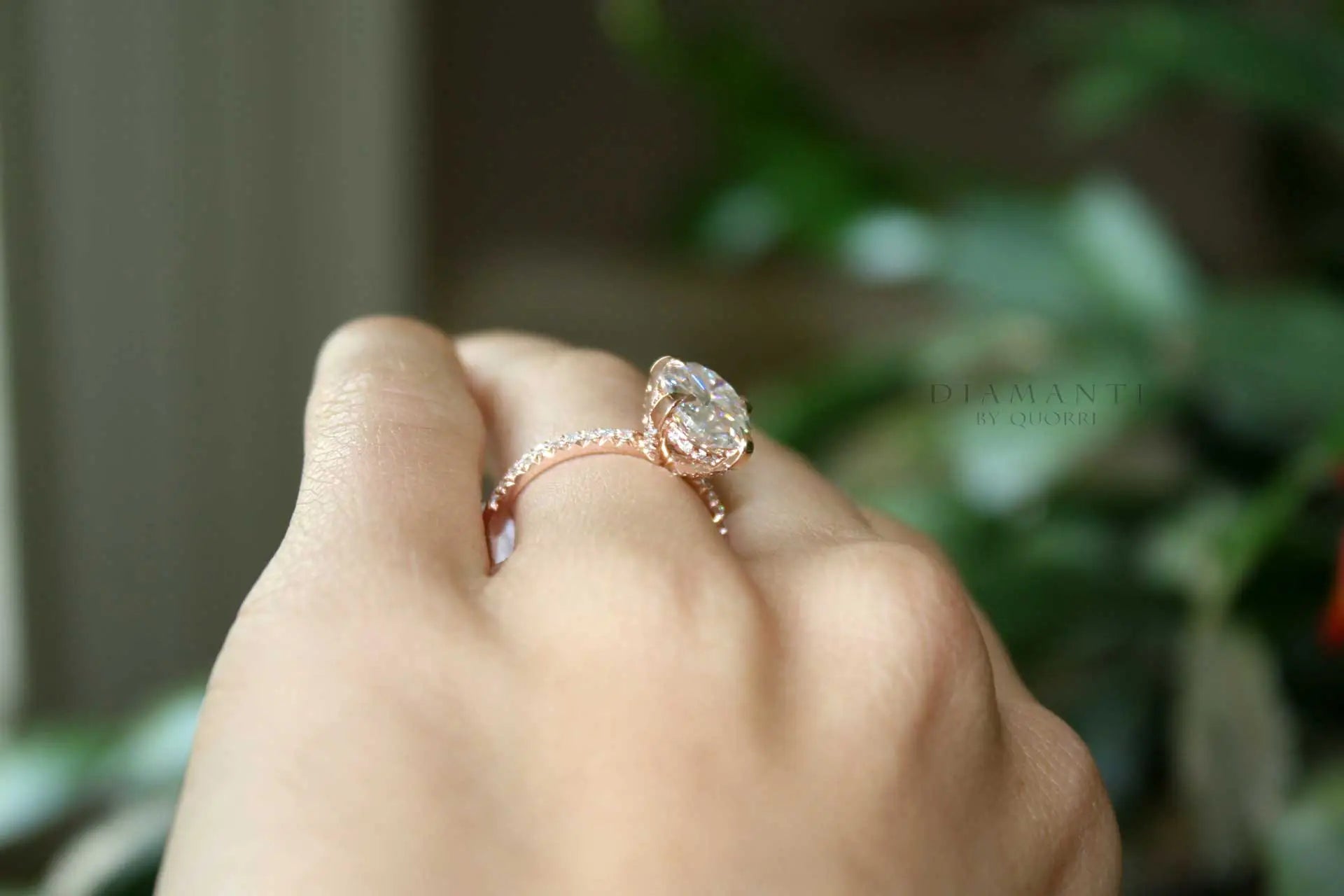

This matters because many buyers still assume these stones are synthetic in the sense of imitation. They are not. A trained gemologist cannot identify origin without advanced equipment.
If you care about what you are buying, the origin should be clear. That is the first reason people turn to lab made diamonds.
Table of Contents
How they are created
There are two main methods.
High pressure high temperature
This method recreates natural conditions. Carbon is subjected to intense pressure and heat until it crystallizes. The result is a diamond with predictable growth patterns.
Chemical vapor deposition
This method grows a diamond layer by layer from carbon gas. It allows tighter control over clarity and color.
Both methods produce diamonds that meet international grading standards.
What matters to you is not the method but the final grading report.
How to judge quality without confusion
The same four factors apply as with mined diamonds. Cut, color, clarity, and carat.
Do not treat these as abstract ideas. Each one affects how the stone looks in real life.
Cut controls light return. This is the most important factor. A smaller well cut stone often looks brighter than a larger poorly cut one.
Color affects tone. Many lab stones fall in the near colorless range. You do not need the highest grade unless you are setting the stone in white metal and care about subtle differences.
Clarity describes internal features. Most inclusions are invisible without magnification.
Carat is weight. It does not equal size in a linear way. Shape and cut change how large a diamond appears.
Ask to see stones under normal lighting. This tells you more than numbers.
Certification is not optional
Every diamond should come with an independent grading report. The most common labs are IGI and GIA.
A report confirms that the stone is a diamond. It also lists the quality characteristics.
If a seller cannot provide this, walk away.
When comparing stones, compare reports first. Then look at the stone.
Price structure and expectations
Lab made diamonds cost less than mined ones. This is not a discount. It reflects supply and production efficiency.
You should expect savings that allow you to prioritize cut or size.
Be cautious of prices that feel too low. These often signal weak cut quality or poor finishing.
Focus on value not on percentage savings.
Ethical and environmental factors
Many buyers choose lab made diamonds to avoid mining related concerns.
These stones avoid large scale excavation. They also offer clearer supply chains.
This does not mean every lab stone has zero impact. Energy sources matter.
If ethics are central to your decision, ask how the diamond was produced and where.
Choosing jewelry not just a stone
A diamantes de laboratorio Barcelona. The setting affects durability, comfort, and appearance.
Think about how you live. A high setting catches light but also catches on clothing. A lower profile is practical for daily wear.
Metal choice affects contrast.
Examples
A near colorless stone in yellow gold can look warmer and larger.
A high clarity stone in platinum highlights precision and structure.
Questions to ask before buying
- Can I see the grading report before purchase
- What is the return or exchange policy
- Is the setting made locally or outsourced
- Can the ring be resized later
These questions protect you from rushed decisions.
Long term ownership and resale
Diamonds are not liquid assets. This applies to both mined and lab stones.
If resale value is your main concern, you should reconsider the purchase altogether.
If your goal is beauty, durability, and transparency, lab made diamonds serve that purpose well.
Insurance values are based on replacement cost not resale. Keep documentation.
Who lab made diamonds are for
They suit buyers who value clarity over tradition.
They fit engagement rings, earrings, and personal jewelry.
They are less suited to those seeking rarity based on geology or historical provenance.
There is no correct choice. Only an informed one.
Common buying mistakes
Overpaying for carat weight while ignoring cut.
Buying without certification.
Assuming all lab stones are equal.
Rushing because of timelines.
Slow decisions lead to better outcomes.
FAQ
Are lab made diamonds real diamonds
Yes. They are chemically and physically the same as mined diamonds and are graded by the same standards.
Do lab made diamonds last as long
Yes. They have the same hardness and durability and will last indefinitely with normal care.
Will people know the difference
No. Without specialized tools even professionals cannot tell by sight alone.